
Contact Us Today312-702-1293

Recent Blog Posts
Are You Afraid Your Child’s Other Parent’s Mental Health Is Endangering Your Children?
 As research about mental health and effective treatment options continue to develop, mental illness has become much better understood and far less stigmatized. However, an important part of living well with mental illness is managing it properly. When a parent has a mental illness that is not addressed, he or she may be unable to care for their children. In serious situations, a parent with mental illness can even pose a risk to a child’s health and well-being. If you share parental responsibilities in Illinois and have seen your child’s other parent act in ways that are cause for concern, an experienced attorney may be able to help you make any necessary changes to parenting time or parental responsibilities.
A Parent’s Mental Health Can Impact a Child’s Mental and Physical Health
Children who are mentally healthy in childhood reach important milestones in their emotional development. Independence, self-soothing, confidence, and other important social skills allow children to successfully navigate life’s tough situations. Mentally healthy children also tend to be happier and function better at home and in school.
Can I Petition to Modify My Illinois Parenting Plan if It Is Unfair?
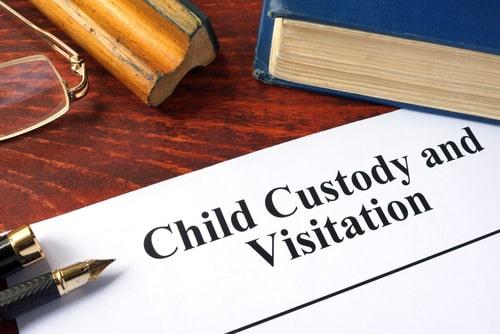 An important part of any divorce involving children is a parenting plan. Parenting plans are part of the final divorce decree and, as such, are legally binding. They cannot be modified without court approval and parents who fail to abide by the terms of their parenting plan can find themselves facing court sanctions and loss of parental privileges. Sometimes, however, life changes, and under certain circumstances, parents can successfully petition an Illinois court to change the parenting plan to an arrangement that makes more sense for their family. If you want to petition for a modification of your parenting plan, here are a few things to know.
When Can a Parenting Plan Be Modified in Illinois?
It is important to note that parents cannot modify the allocation of parental responsibilities (custody or important decision-making authority) simply because they do not like the plan’s contents or believe the arrangement is unfair. Many parents feel upset when they first get divorced because they are dissatisfied with the arrangements of the divorce decree. However, whether an arrangement is truly unfair is neither here nor there as far as Illinois courts are concerned; to petition for a modification, parents must wait two years after the divorce is finalized. The only exception to this is if keeping the current plan would put a child at risk of physical or emotional harm.
Five Tips For Creating Your First Parenting Plan in Illinois
 Divorce can feel like a lose-lose proposition. No matter what you do, it is virtually impossible for both parents to get everything they want - especially when it comes to issues like parenting time and parental responsibilities.
But difficult compromises are an important part of every divorce because children need both parents whenever possible. Creating a parenting plan that meets the best interests of your children and accommodates you and your spouse’s schedules and needs can be very challenging but it is definitely doable. Finding a workable balance is important for a sustainable co-parenting arrangement, and with the help of an experienced family law attorney, you can do it too. Here are five tips to help.
Create a Parenting Schedule That Makes Sense
While it might be tempting to jockey for as much parenting time as possible, single parenting is difficult. Burned-out parents are not at their best, and children who spend most of their time with only one parent may see their relationship with their other parent suffer. Instead, consider your schedule and propose a realistic solution that meets your needs and your children’s best interests.
Five Benefits of Establishing Paternity in Illinois
 Some mothers in Illinois are reluctant to name their child’s father on a birth certificate and for good reason. Their child’s father may be abusive, angry, or an alcoholic and the mother may fear that by establishing paternity, she is exposing her child to a lifetime of a relationship with a poor caregiver. A mother may also be reluctant to try to establish paternity because she is not sure who the child’s father is. Others still may want to legally name their child’s father but feel unable because the father has passed away.
Yet legally establishing paternity is important for many reasons. Single parenthood is a daunting task that poses a difficult financial and emotional burden. If you are on the fence as to whether or not you want to establish paternity, here are five great benefits that you, your child, and their father could enjoy if you do.
Benefits of Establishing Paternity
- Simplified child support and parenting agreements - Before a father can get parenting time or can be ordered to pay child support, a legal relationship with a child must be established. Even if parents already have a verbal agreement about child support or a co-parenting schedule, not establishing paternity can make these impossible to enforce.
What Is a Firearms Restraining Order, and How Can I Get One in Joliet?
 Guns are powerful tools that can be used for many different purposes. Unfortunately, sometimes individuals living in Illinois use firearms to threaten, hurt, or intimidate family members and intimate partners in terrifying acts of domestic violence. People using firearms unsafely may even be a threat to themselves. When misuse of firearms becomes serious enough that gun violence may be an imminent threat, a Firearms Restraining Order (FRO) is a type of order of protection that is available in Illinois.
What Is a Firearms Restraining Order?
Illinois enacted a law beginning January 1st, 2019, called the Firearms Restraining Order Act. This act allows someone’s family, parents, roommates, or anyone else who lives in the same house to petition for a court order prohibiting that person from owning or buying guns for up to six months. Law enforcement can also petition for a FRO.
Three Facts About Civil No-Contact Orders in Illinois
 In our last blog post, we discussed Orders of Protection in Illinois and how they can be obtained. Orders of Protection are meant to keep victims and abusers separate when they share or have shared a domestic relationship. But not all victims are in domestic relationships, and in these cases, other help may be necessary.
Fortunately, there are other types of protection that victims can obtain from an Illinois court. “Civil no-contact orders” protect victims of “nonconsensual sexual conduct” who want their abuser to be prohibited from contacting them. If you feel you are in danger of harm, whether psychological or physical, a civil no-contact order may be helpful to you.
Who Can Get a Civil No-Contact Order?
The purpose of a civil no-contact order is to protect victims of sexual assault. According to Illinois law, this includes any nonconsensual sexual conduct or sexual penetration. Civil no-contact orders can protect more than just the victim - her children, parents, current partner, and other household members can also be included in the petition so the abuser cannot contact them or harass the victim through other people. Parents can also obtain civil no-contact orders on behalf of a minor child.
You Can File for a Will County Restraining Order Today
 Victims of domestic violence in Illinois face a difficult set of choices. Because many victims fear that they may face retaliation if they seek legal help, it can feel as though they are in the impossible dilemma of trying to fix a problem only to risk it getting worse. But if you feel stuck in an abusive situation where you are enduring emotional, physical, or sexual abuse, you likely already know that you do not want to live with it forever. Fortunately, there is help available: you can file for an order of protection in Will County today.
First, Make Sure You Are Safe
Statistics show that victims of domestic violence are most likely to be attacked if they try to leave their abuser or get help. It is important to make sure that you have a plan or a place to go if you are afraid for your safety. You may not be able to control your abuser’s behavior, but you can resolve to put yourself and your children in a safe place. Once you are ready, you can file for an order of protection at any time - even at night or over the weekend when the court is closed.
Your Questions About Prenups, Answered
 As a newly engaged person, you may have a million thoughts running through your head. Some of these thoughts may be related to a prenuptial agreement. Prenuptial agreements or “prenups” are legal documents that protect spouses’ financial interests in the event of death or divorce. However, there are many myths and misunderstandings associated with these essential legal documents. Read on to learn about the basics of signing a prenup in Illinois.
What Is the Purpose of a Prenup?
If your soon-to-be spouse has asked you to consider signing a prenup, your first thought is probably, “Why?” Prenuptial agreements have been increasing in popularity recently for a variety of reasons. One reason is that people are simply more realistic about marriage and divorce. Even the most loving couple may eventually break up. The purpose of a prenuptial agreement is to prepare for this possibility.
3 Tips for Co-Parenting During the Holidays
 Being a parent is one of the toughest jobs in the world. Being a divorced parent is often even more challenging. If you are a parent who is separated or divorced, you may be worried about how you and your children will get through the holidays. The first Thanksgiving, Christmas, Hanukkah, or other major holiday after a separation or divorce can be difficult to handle. There is no perfect way to handle the holidays as a divorced parent, but the following tips may help.
Make Sure Holidays Are Addressed in Your Parenting Plan
When parents get divorced in Illinois, they create a parenting plan which addresses parental responsibilities, parenting time, and other important child-related matters. If the parents cannot agree on the elements of the parenting plan, the case may eventually be decided by the court. When parents make their own parenting plans, they are required to include approximately 15 individual provisions described in the Illinois Marriage and Dissolution of Marriage Act (IMDMA). However, parents should go above the bare minimum when it comes to drafting their parenting plan. They should include specific information about where children will spend holidays, birthdays, and other special days. Deciding these matters in advance can help the parents avoid conflict.
Divorce Involving Older Couples Presents Financial and Personal Challenges
 The decision to end a marriage is not one that is reached easily – especially after years or decades living as a married couple. Divorce after age 50 takes courage. It can be frightening to leave the predictability of your marriage and embark on a new life chapter. Ending a marriage near retirement age can also involve several financial complications. Many people in their 50s and 60s hope to retire and spend their time playing with grandchildren, traveling, or otherwise enjoying their golden years. Some divorcing spouses over age 50 worry that the divorce will upset these plans. If you are considering divorce, it is important to know how the split can impact your financial future.
“Gray Divorce” Rates Show More Older People Are Divorcing
The American Association of Retired Persons (AARP) created the phrase "gray divorce" to describe divorce involving spouses over age 50. Although the overall divorce rate has declined, gray divorce rates are higher than ever. In fact, the number of older people getting divorced has doubled in the last several decades. The reasons for this significant increase are just as varied as the people getting divorced. Some people divorce because they simply reach the conclusion that their marriage no longer works. Others divorce later in life because their children have grown up and moved out of the home. Whatever the reason, getting divorced after age 50 can present unique challenges – legally, financially, and emotionally.

From Our Blog
Contact Us Today
Set up a consultation with us to get legal help with your family law case. Call 312-702-1293 or fill out the form below:
Address
Orland Park, IL 60462
Contact
Social Media




From our office in Orland Park, we serve clients throughout the south and southwest suburbs of Chicago including but not limited to Bolingbrook, Chicago Heights, Country Club Hills, Crest Hill, Flossmoor, Harvey, Hazel Crest, Homewood, Hyde Park, Joliet, Kankakee, Lockport, Markham, Mokena, New Lenox, Plainfield, and South Holland.
Results listed are not a guarantee or indication of future case results.
15255 S. 94th Ave. 5th Floor, Orland Park, IL 60462
312-702-1293